%20(1).png)

Event Project Management Software for Small Event Teams and Who Keeps the Board Current

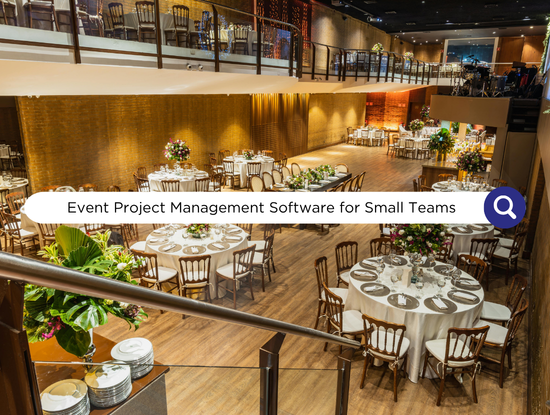
Event project management software is a tool that holds an event's tasks, deadlines, owners, and vendor to-dos in one place, so everyone working on it sees the same plan. For a small event team, the right choice depends less on the brand than on two questions: can the tool bend around a date that cannot move, and is someone responsible for keeping it current?
Most event teams already have a version of this, whether a spreadsheet, a shared folder, or a group text. The trouble starts when five events are running at once and the real plan lives in three places. This guide covers how events differ from ordinary projects, the four types of tools event teams use, the features that matter when the date is fixed, how to set up one board per event, and who should keep it updated.
Key Takeaways
An event is a project with an immovable end date, many outside parties, and a final week that compresses everything, so a tool built for flexible deadlines needs adjusting.
Event teams use four types of tools: general project tools, event-specific platforms, CRM and business suites with project features, and spreadsheets. Each trades flexibility against built-in event structure.
Five features matter most for events: deadlines that move with the event date, templates by event type, a view across all live events, limited access for clients and vendors, and a usable phone experience.
Set up one project per event from a template, with a few phases, a few custom fields, an owner and due date on every task, and the views your team uses.
A board goes stale when updates stay in email and texts. The software stores information. It does not chase vendors or move updates onto the board.
An event VA can own the upkeep: moving updates onto the board, chasing vendor replies, running a weekly review, and improving the template after each event.
What Makes an Event a Different Kind of Project
The Project Management Institute describes a project as a temporary effort with a defined end that creates a unique result, which fits an event closely. But events have traits that ordinary project setups often handle poorly:
The date cannot move. Most projects can slip a week. An event cannot, so every deadline works backward from the event date.
Many outside parties. Clients, venues, caterers, rental companies, and performers each own pieces of the plan, and most of them will never log into your system.
Repeatable types. A wedding, a corporate dinner, and a conference each follow a pattern, which makes templates unusually valuable.
A compressed final stretch. Work piles into the last week, so a board that is a few days stale is a board nobody trusts.
A live day. On the day, the plan has to work on a phone, in a hallway, with a weak signal.
These traits explain why a tool that suits a marketing team can feel wrong for an event team, and why the setup matters more than the product.
Four Types of Event Project Management Software
Type | Examples | Best for | Watch out for |
General project tools | Teams that want flexibility and a familiar tool | You build the event structure yourself, including templates and views, and vendors rarely work inside the tool | |
Event-specific platforms | Planning Pod, Aisle Planner | Teams that want vendors, guest lists, and timelines built in | They may include features you do not need and fit unusual events less easily |
CRM and business suites with project features | Solo planners and small teams who want sales, contracts, and projects together | Project features are often lighter than in a dedicated tool | |
Spreadsheets and shared documents | Google Sheets | A one-off event, or a team starting out | Nothing alerts anyone when a date shifts, and it strains once several events overlap |
If you are choosing a CRM, see our guide to the best CRM for event planners. That decision is about sales, contracts, and payments. For timeline, seating chart, and vendor messaging tools, see our wedding coordinator tools guide. This guide stays on managing the work between the signed contract and event day.
Features That Matter When the Date Cannot Move
Lists of event management software features run long. For a small event team, five matter most, and each is worth testing in a trial rather than trusting from a product page.
Deadlines that move with the event date. If the event date changes, can the tasks shift together, or do you edit every deadline by hand? Test this with a real event.
Templates by event type. You should be able to start a new event from a saved plan, not a blank page, and improve that plan after each event.
A view across all live events. A team running several events needs one screen that shows what is due this week across every project.
Limited access for clients and vendors. Outside parties should see or comment on what concerns them without seeing your whole business. The FTC's Start with Security guide advises giving each person access only to the data they need for their role.
A usable phone experience. On the day, someone will open the plan on a phone, so check it there, including how it behaves with a weak signal.
Comments and approvals attached to tasks also help, because a client's sign-off or a vendor's confirmation then sits next to the task it belongs to. Software review sites such as Capterra and G2 list project management tools by category and can help you build a shortlist.
How to Set Up an Event Project Board
Project management for event planners follows the same structure in most tools. The names change, but the setup does not.
Step 1: Make One Project Per Event, From a Template
Build a template for each event type you run, then create every new event from it. A new wedding or corporate dinner should start with the standard phases, fields, and tasks already in place, so nothing depends on someone remembering what a good plan includes.
Step 2: Use a Few Phases That Match How Events Run
Phases give the board a shape. A simple set is Booked, Planning, Vendors Confirmed, Final Week, Event Day, and Wrap. Rename them to match how your team talks, and keep the list to six or seven, because a long list of phases becomes a second filing system. For what goes into each phase, see our virtual event coordination checklist.
Step 3: Add Custom Fields You Will Filter By
Useful fields include event date, event type, client, venue, lead planner, and a status such as on track or at risk. They let you see every wedding in March or every at-risk event in a click. Skip any field nobody will fill in.
Step 4: Put an Owner and a Due Date on Every Task
A task without an owner is a wish. For tasks that belong to outside vendors, assign someone on your team to chase the reply, since most vendors will not work inside your tool.
Step 5: Choose Views for Different Jobs
Use a calendar view for dates, a board view for status, and a portfolio or workload view for the week ahead. Each person should be able to open the view they need without building it first.
Step 6: Add Reminders and One Weekly Review
Where the tool supports automations, use them for due-date reminders and for creating a new event project when a contract is signed. Then add a fixed weekly review of every active event, every overdue task, and every vendor waiting on a reply.
Why Event Boards Go Stale, and Who Should Prevent It
A project board is only as useful as its last update. Most boards go stale for the same reasons. Updates arrive by email, text, and phone call and never reach the board. No one owns it. And the template drifts, so each new event starts from an outdated plan. The software stores information. It does not chase a vendor who has not replied, and it does not move a client's email onto the right task.
That upkeep is a natural job for an event VA, working alongside the planner and the team:
Planner | Event VA | Team members |
Sets priorities and signs off on plans and exceptions | Moves updates from email and texts onto the board, chases vendor replies, and flags overdue tasks | Update their own tasks and statuses |
Reads the weekly summary | Runs the weekly review and closes out finished events | Raise blockers early |
Approves template changes | Improves the template after each event | Start every event from the template |
For how this working relationship runs day to day, see our virtual event support guide. For the full range of support models, see our event planning assistance guide.
Frequently Asked Questions
What is event project management software?
Event project management software holds an event's tasks, deadlines, owners, and vendor to-dos in one place. Some tools are general project tools adapted for events, and others are built for event planning with features such as vendor lists, guest lists, and timelines.
Do I need event-specific software, or will a general project tool work?
A general project tool works well if you invest in the setup: templates, phases, custom fields, and views built around the event date. An event-specific platform has more of that built in but may fit unusual events less easily. Test both with a real event, since the best choice depends on how your team works day to day.
What event management software features matter most for a small team?
Deadlines that move with the event date, templates by event type, a view across all live events, limited access for clients and vendors, and a usable phone experience. Test each one in a trial with a real event rather than relying on a feature list.
Can I use my CRM to manage event projects?
Some CRMs and business suites include project features, which can be enough for a solo planner or a small team. They are often lighter than dedicated project tools, so check whether yours handles templates, deadlines tied to the event date, and a view across live events before you rely on it.
Who should update the project board?
Everyone updates their own tasks, but one person should own the board as a whole, moving updates in from email and texts, chasing vendor replies, and running a weekly review. That can be the planner, an operations lead, or an event VA.
Find Out Who Should Keep Your Event Board Current
Choosing event project management software is the smaller half of the job. Keeping the board accurate every week is the larger half. A time audit shows how many hours go to chasing updates, moving information between inboxes and boards, and reconciling plans, and which of those an events virtual assistant could take over first.
About Your Startup Operations
Your Startup Operations (YSO) is a Women-Owned Small Business (WOSB) certified, white-glove operations agency co-founded by Jenna Henao and Alexis Schomer. YSO helps event business owners and other service-based companies step out of daily operations by installing a dedicated Ops Assistant trained specifically for their business, typically helping owners reclaim 30–40 hours per week.
YSO has been featured in Forbes, Voyage LA, Authority Maximizer, EIN Presswire, and AP News.
Explore our event vendor ops services, see client outcomes on our case studies page, or get in touch to talk through what your business needs.
About the Author

Jenna Henao is the Co-Founder and Operations Expert at Your Startup Operations. She partners with business owners to streamline operations, strengthen workflows, and build reliable teams that drive long-term growth. With a background in entrepreneurship and business operations, Jenna has led initiatives across HR, finance, recruitment, operations, sales, marketing, and team leadership. She has helped businesses grow from six to seven figures by developing scalable systems, recruiting outstanding talent, and implementing processes that support lasting success. Connect with Jenna on LinkedIn.
Reviewed by

Alexis Schomer is the Co-Founder and Marketing & Operations Expert at Your Startup Operations. She works with business owners to optimize operations, improve delegation, and build scalable systems that support sustainable business growth. Drawing on her experience in marketing, entrepreneurship, and business operations, Alexis believes effective delegation is about more than hiring a virtual assistant. It starts with selecting the right person, creating efficient workflows, establishing clear expectations, and providing the training and support needed for teams to succeed. This practical, systems-first philosophy guides every client partnership at YSO. Connect with Alexis on LinkedIn.
Free Resources
Access practical tools, templates, and SOPs designed to simplify operations, improve delegation, and support business growth.

25 Tasks You Can Offload To Your VA Today
Your day fills up fast with follow-ups, inbox replies, scheduling, and admin.
This guide
shows exactly
what to hand
off first so
you can
stop doing it all yourself and
free up
real time.

The Ultimate Productivity Toolkit for Event Professionals
Managing clients, coordinating vendors, and handling daily administrative tasks can quickly fill your schedule. This toolkit shares five practical ways a virtual assistant can help streamline your workload so you can spend more time growing your business.
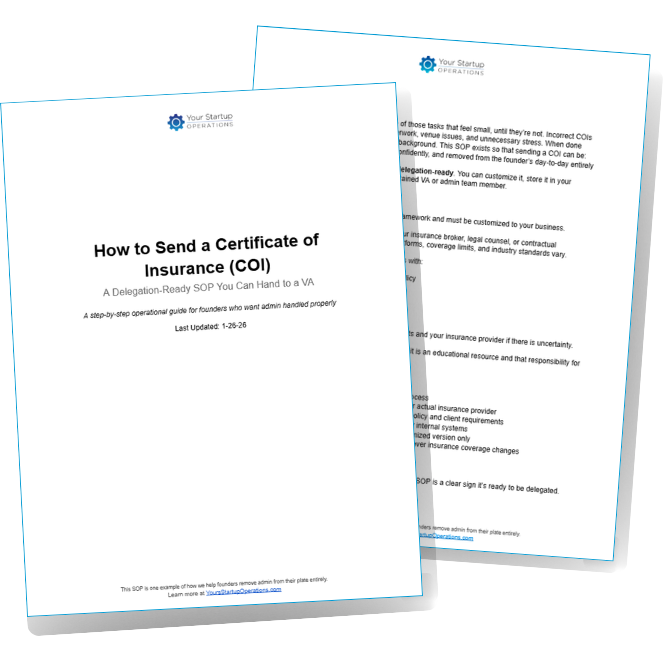
How to Send a Certificate of Insurance (COI)
Submitting a Certificate of Insurance doesn't have to be complicated.
This SOP
provides a clear, step-by-step process to help you submit accurate COIs, avoid delays, and keep approvals moving forward.